Scolymia (Doughnut / Button Coral)
Homophyllia australis · also called Scoly, Doughnut Coral, Button Coral, Master Scoly, Australian Scolymia, Scolymia australis (former name)
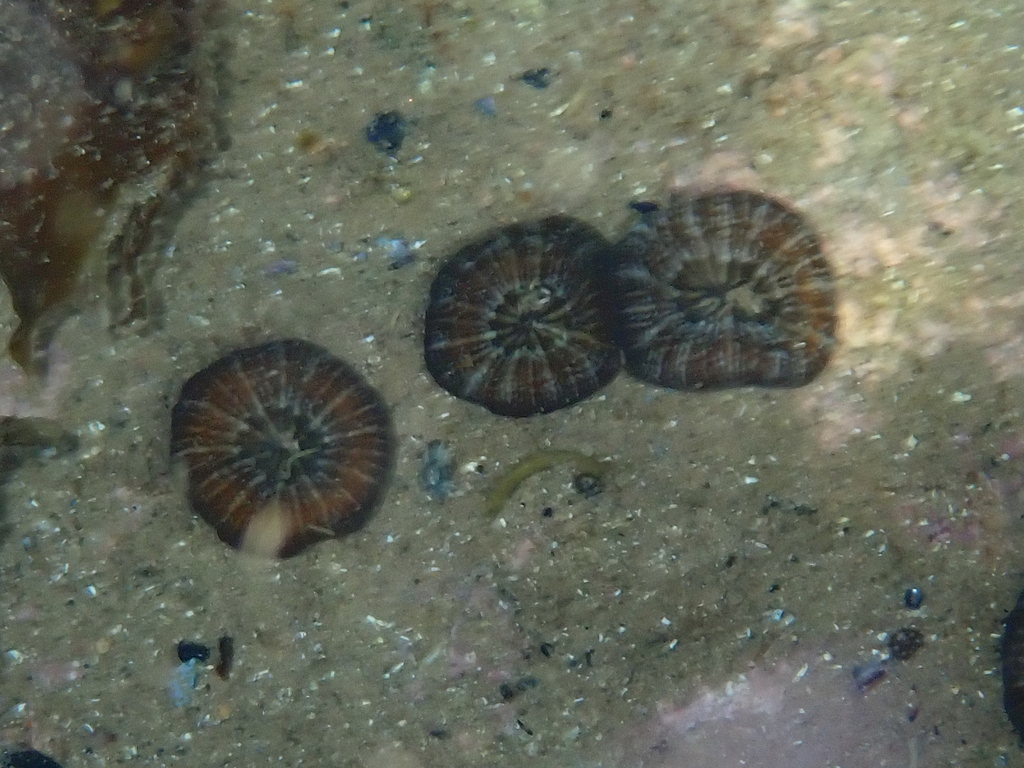
Photo: iNaturalist (CC0) · CC0
A solitary single-polyp LPS coral famous for intensely saturated, multicolored 'master' specimens. Slow-growing, hardy, and a centerpiece collector's coral that sits flat on the sand bed. Now placed in Homophyllia (the old name Scolymia australis is retained in the hobby).
🩺 Need expert help with your scolymia (doughnut / button coral)?
Connect with a specialist near you or ask a licensed vet — never substitute online guidance for hands-on care in an emergency.
Quick facts
| Size | Single large solitary polyp typically 5-12 cm (2-5 in) across; some master colonies reach 15 cm. |
| Lifespan | 20–100 years |
| Social needs | solo |
| Native region | Southern and eastern Australia (cooler subtropical reefs); related Scolymia/Homophyllia occur across the Indo-Pacific |
| Origin | Old World |
| Climate | ⛅ Subtropical |
| Water type | 🌊 Marine |
| Family | Lobophylliidae |
| Genus | Homophyllia |
Part of the LPS Corals
Large-polyp stony corals (brains, Euphyllia, Goniopora, Scolymia, Lobophyllia, Favites, Acan, Dendro, Octospawn) with fleshy polyps over a calcium-carbonate skeleton. Intermediate-care reef corals that appreciate moderate light/flow and direct feeding.
Habitat & space requirements
From the minimum an animal needs to be kept humanely, up to the ideal setup. Bigger is almost always better — minimums are floors, not targets.
Life & growth stages
How this animal changes through its life — each stage often has its own care, diet and space needs.
Color & pattern variants
Natural variants occur in the wild; selectively bred (man-made) variants were developed in captivity.
 representative
Master Scoly →
The grail-grade scoly: a veritable pinwheel of four, five, or more tie-dyed colors swirling around the mouth, often reading like a cross between a Warpaint and a Bleeding Apple.
Tip: Treat it like a centerpiece on the sandbed under moderate, stable light and gentle flow. The animal itself is hardy and easy, but acclimate it to new lighting slowly so the delicate multicolor balance doesn't shift.
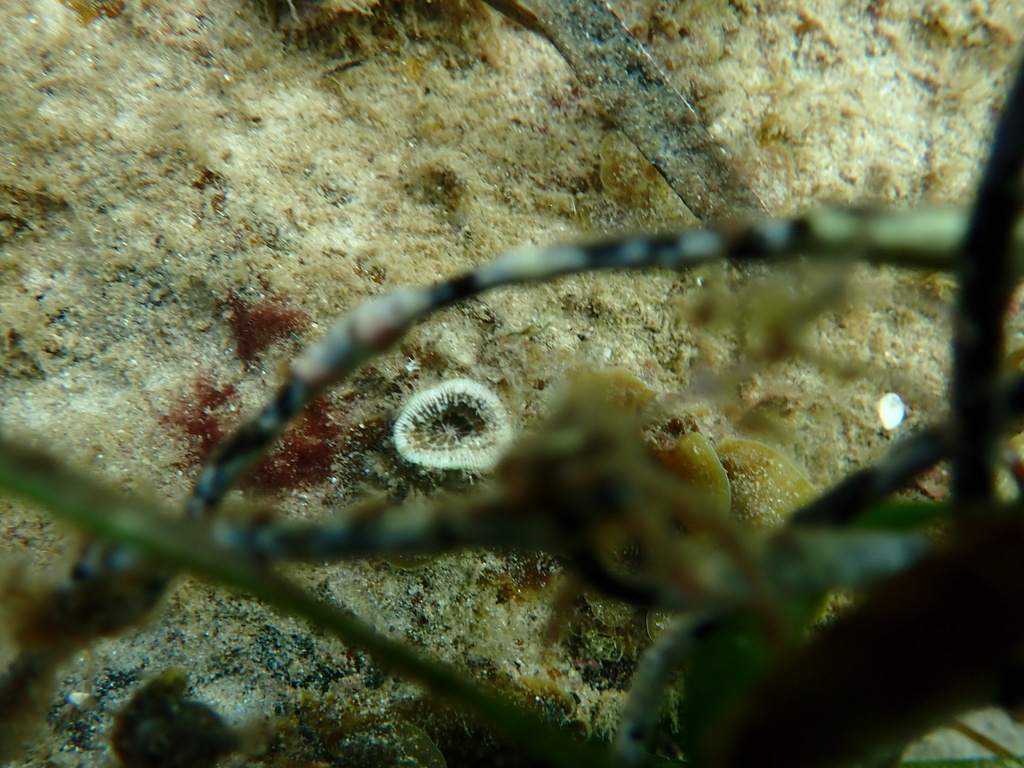
 representative
Bloodshot Scoly
Deep red body with bright contrasting central mouth, a classic high-value color form.
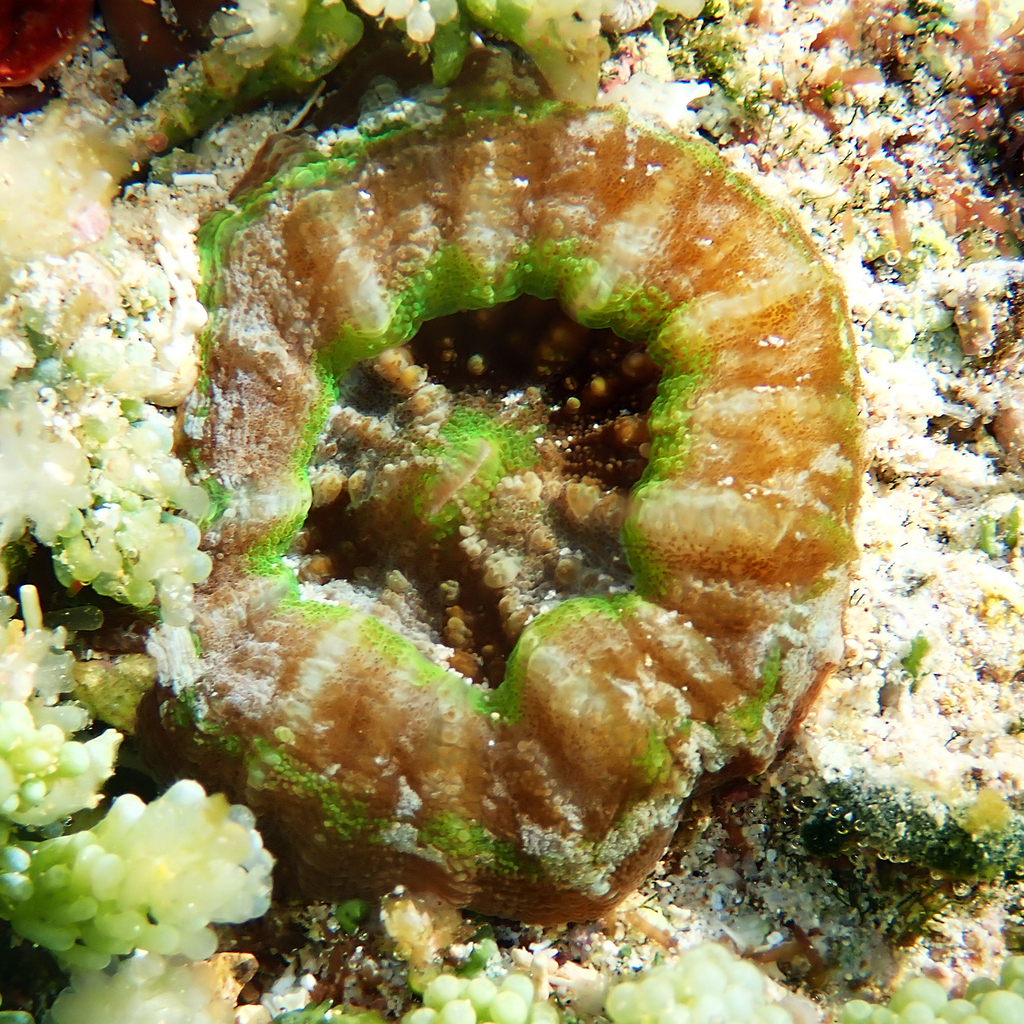 representative
Warpaint Scoly
Bold striped/streaked pattern of green and red radiating from the mouth, resembling war paint.
 representative
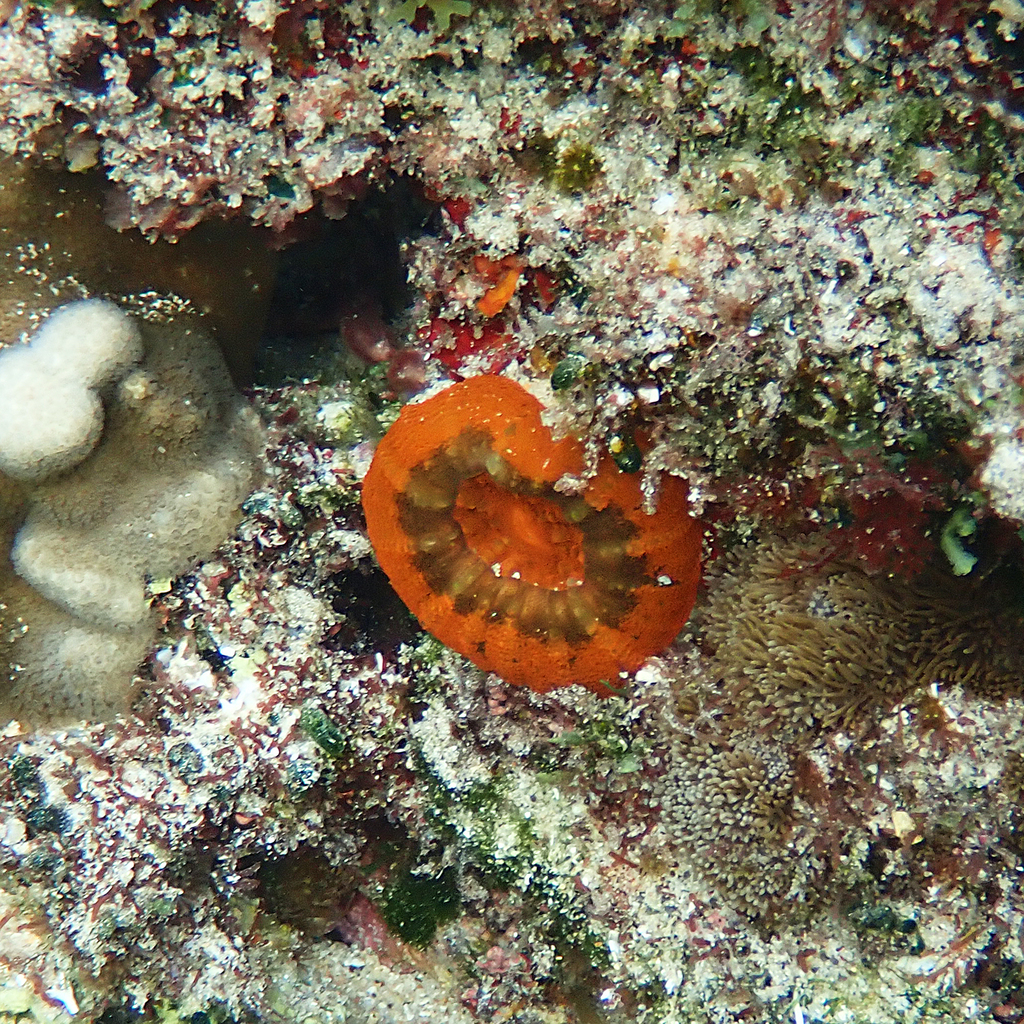
Bleeding Apple Scoly →
A classic Aussie scoly with a deep apple-red or green body 'bleeding' out from the central mouth into a contrasting rim, often green with red radial streaks. One of the most iconic and recognizable scoly looks in the hobby.
Tip: Place low in the tank on the sandbed under moderate, indirect light (roughly 75-125 PAR) and gentle, indirect flow — too much light washes out the red pigment and too much flow stops it from inflating its fleshy disc. Spot-feed small meaty foods weekly.
 representative
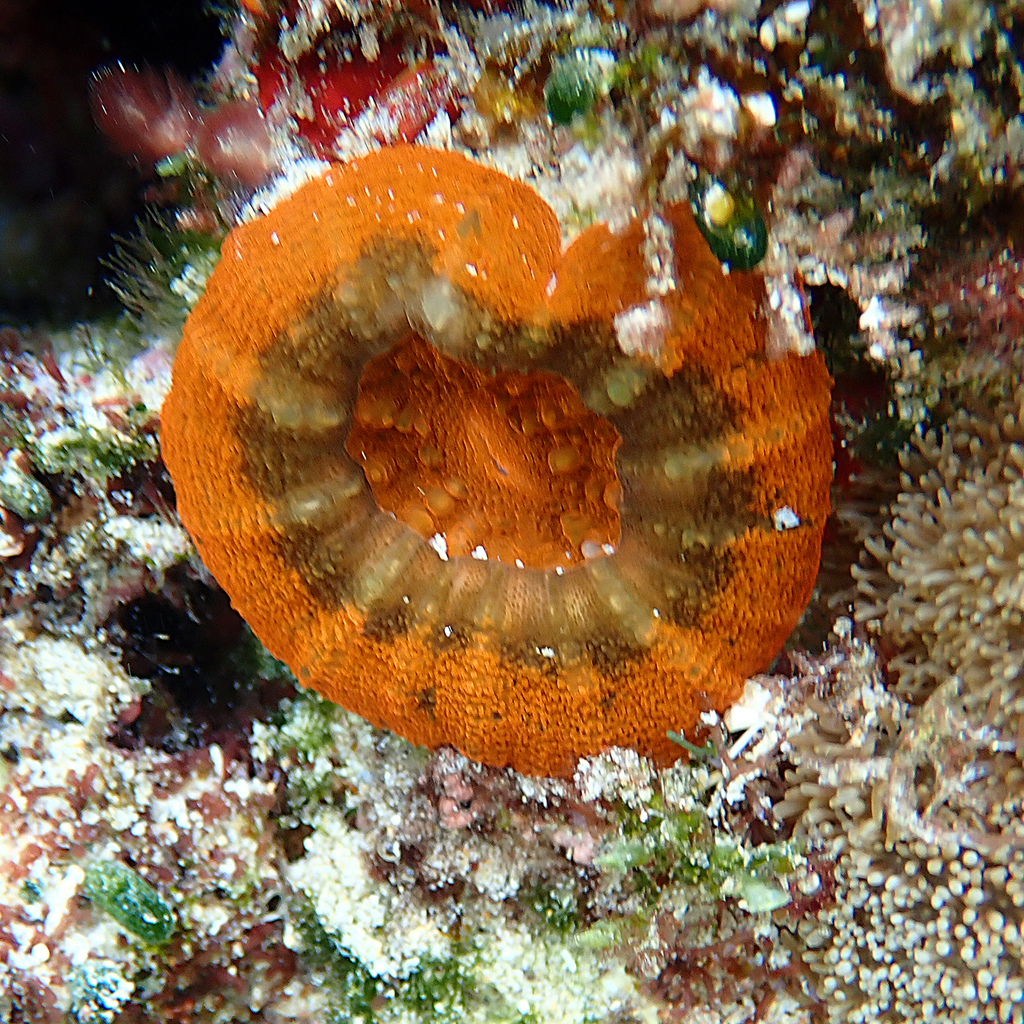
Double Bleeding Apple Scoly →
A premium Bleeding Apple variant showing two distinct 'bleeding' color zones radiating from the mouth, giving a richer two-tone apple effect than the standard piece.
Tip: Keep on the sandbed under softer light (around 75-125 PAR) with low alternating flow; if the second color zone starts to fade, lower the light slightly rather than increasing it, as these reds and oranges hold best under moderate lighting. Target-feed quality frozen LPS food about once a week.
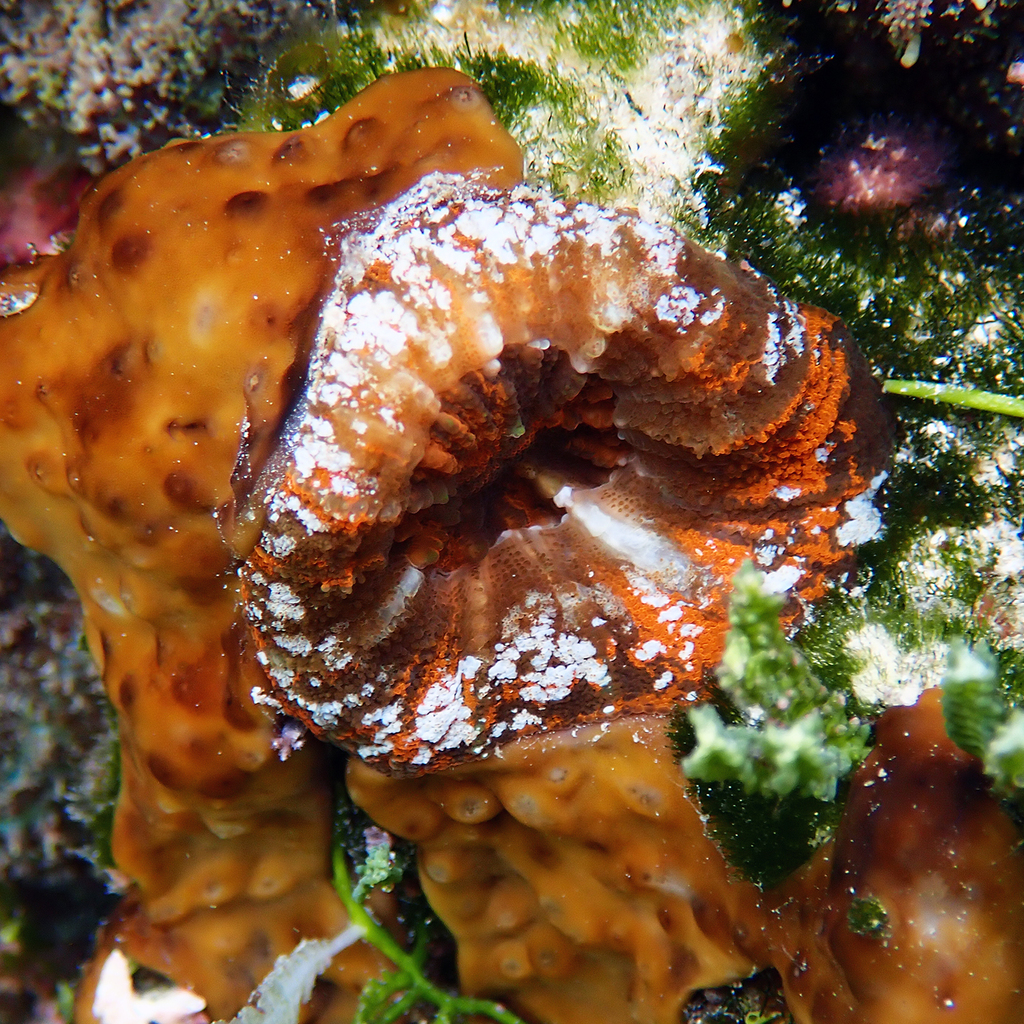
representativeBleeding Sour Apple Scoly →
Mostly neon/lime green body with thin red radial bands running out from the central mouth, the 'sour' (green) counterpart to the redder Bleeding Apple.
Tip: Give it moderate light to keep the neon green popping, and a low-flow spot on the sand so the polyp can fully inflate during the day. Feed small meaty foods to keep it full and colorful.
 representative
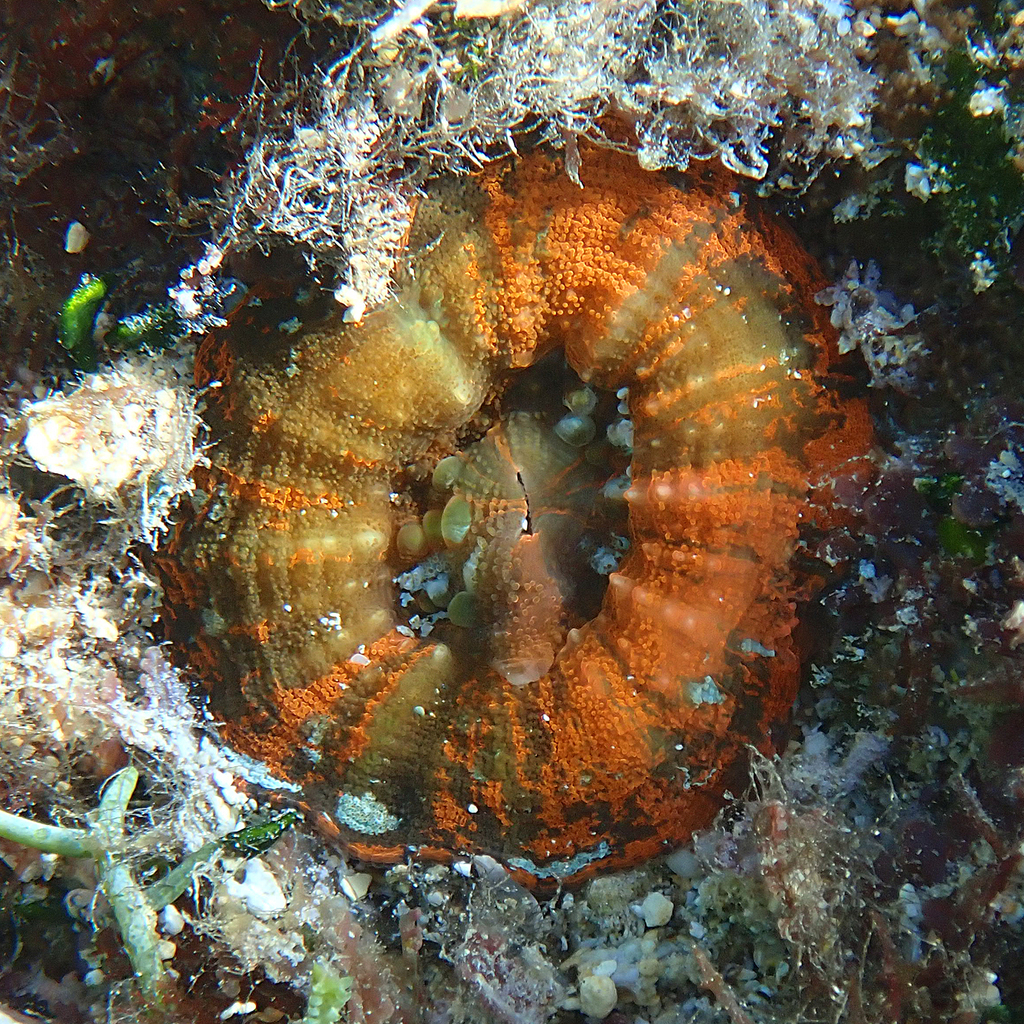
Warpaint Scoly (War Paint) →
Famous for a vibrant multicolor disc — typically purple, mint green, and red, often with blue marbling or streaking smeared across it like tribal war paint. A top-tier multicolor scoly look.
Tip: Place on the sandbed under moderate, indirect light and gentle flow; the colors stay most saturated at lower-to-moderate light — drifting too high in the tank tends to mute them. Spot-feed meaty foods weekly.
 representative
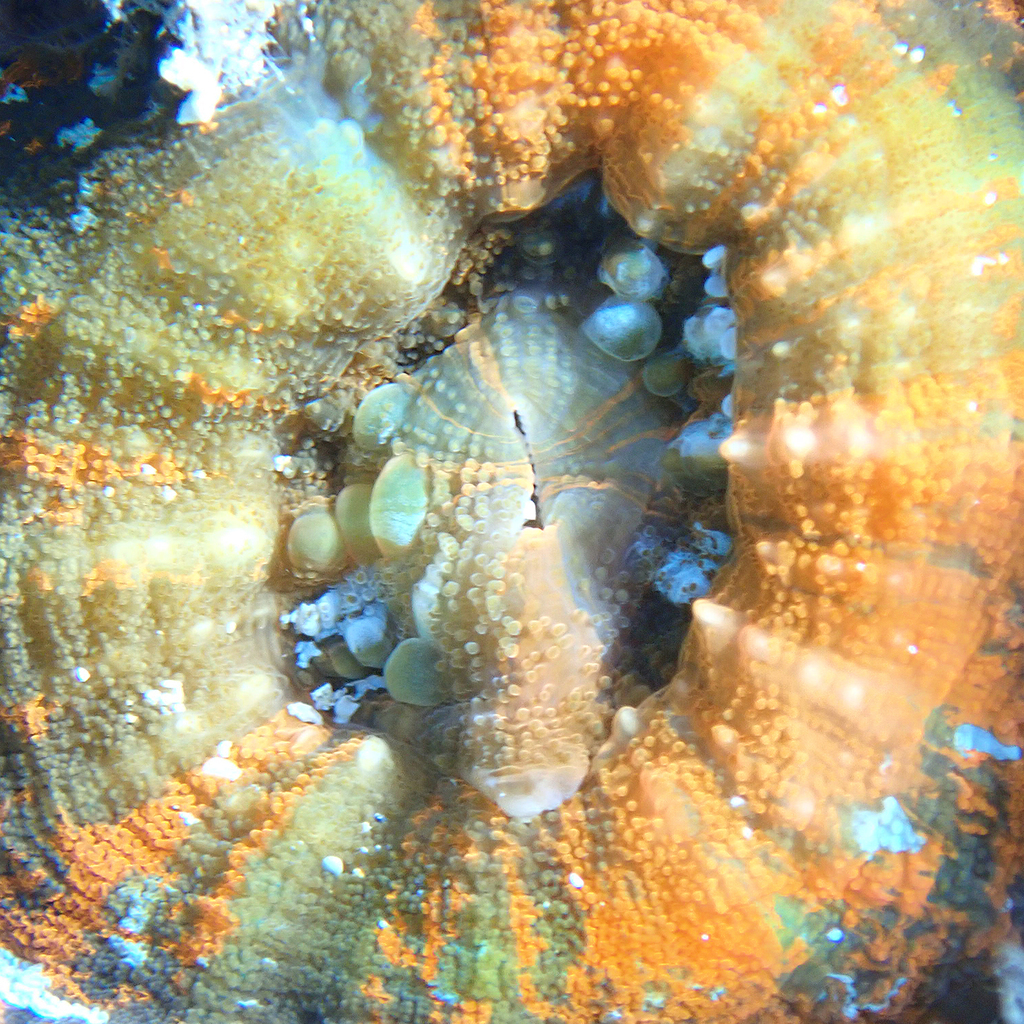
Superman Scoly →
Bold alternating red and blue radial bands running from the mouth to the rim, named after Superman's classic red-and-blue color scheme.
Tip: Sandbed placement under moderate light and gentle flow keeps both the red and blue bands intense; avoid high flow that prevents the fleshy tissue from inflating over the bands. Feed meaty foods weekly.
 representative
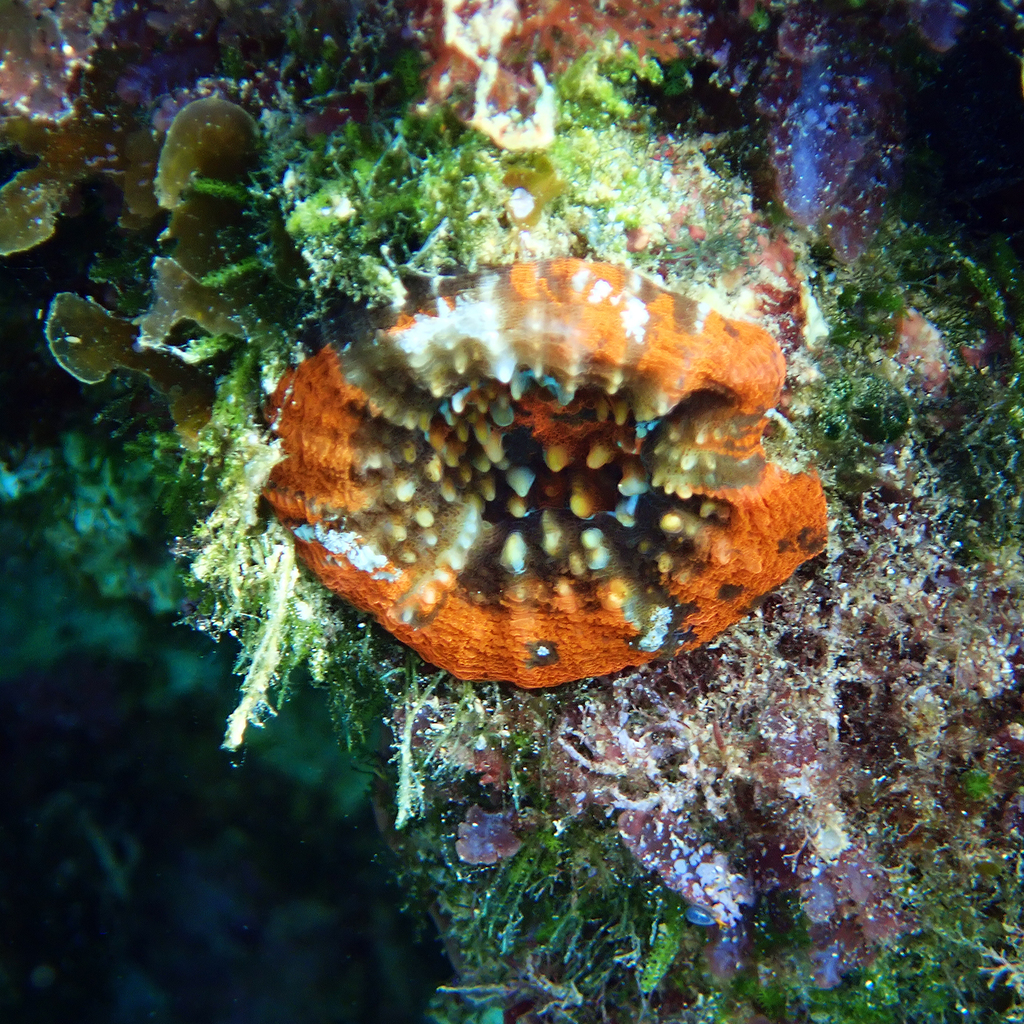
Reverse Superman Scoly →
The inverse of the standard Superman: a bright red-orange base with sparkly blue streaking through it, rather than a blue base with red bands.
Tip: Keep low on the sand under moderate light to protect the red-orange base from bleaching, with low flow so the polyp inflates fully and shows the blue sparkle. Supplement with meaty foods such as mysis or krill.
 representative
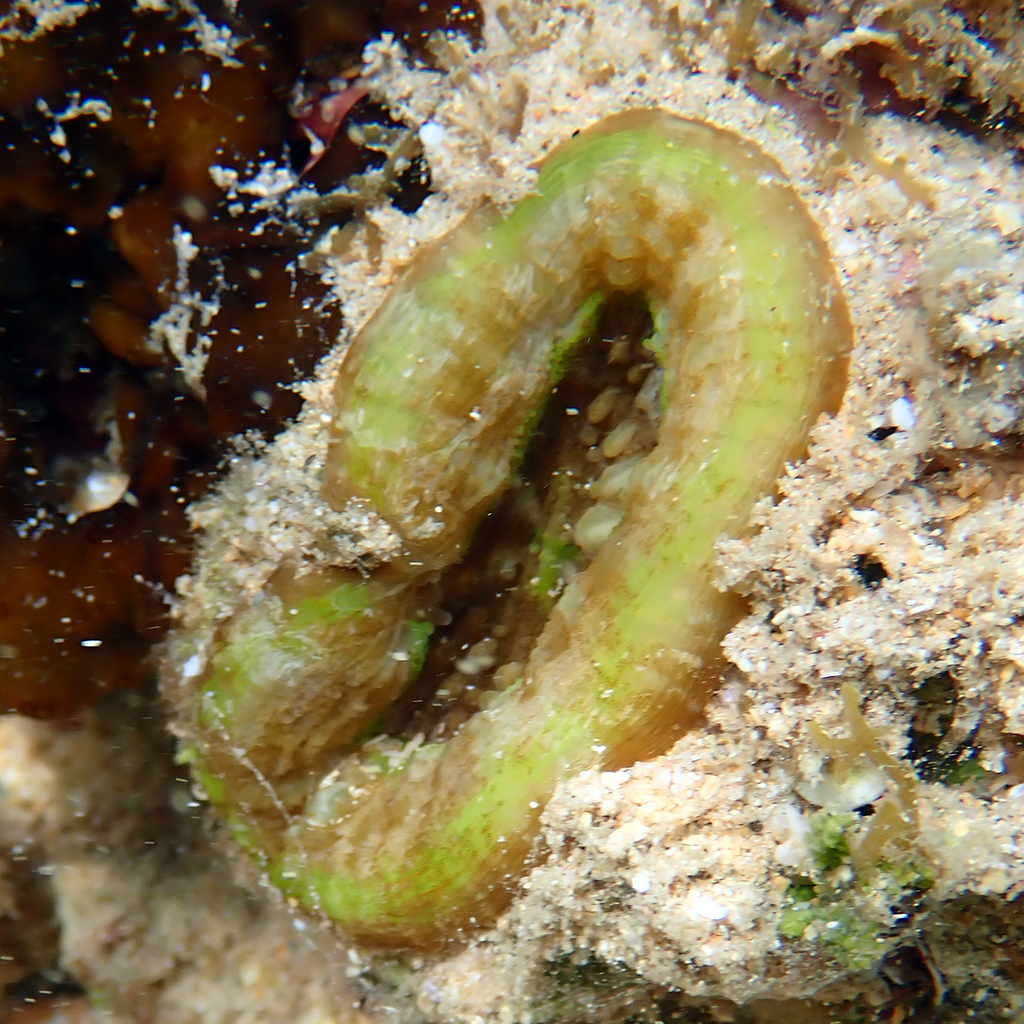
UFO Scoly →
Typically a green-and-violet scoly arranged in a circular pattern, often with lemon-yellow and lime-green striations leading out to a dark contrasting 'UFO' rim.
Tip: Place on the sandbed under moderate light and low, indirect flow; the green/violet holds best at lower-to-moderate light rather than intense lighting. Spot-feed meaty foods weekly.
 representative
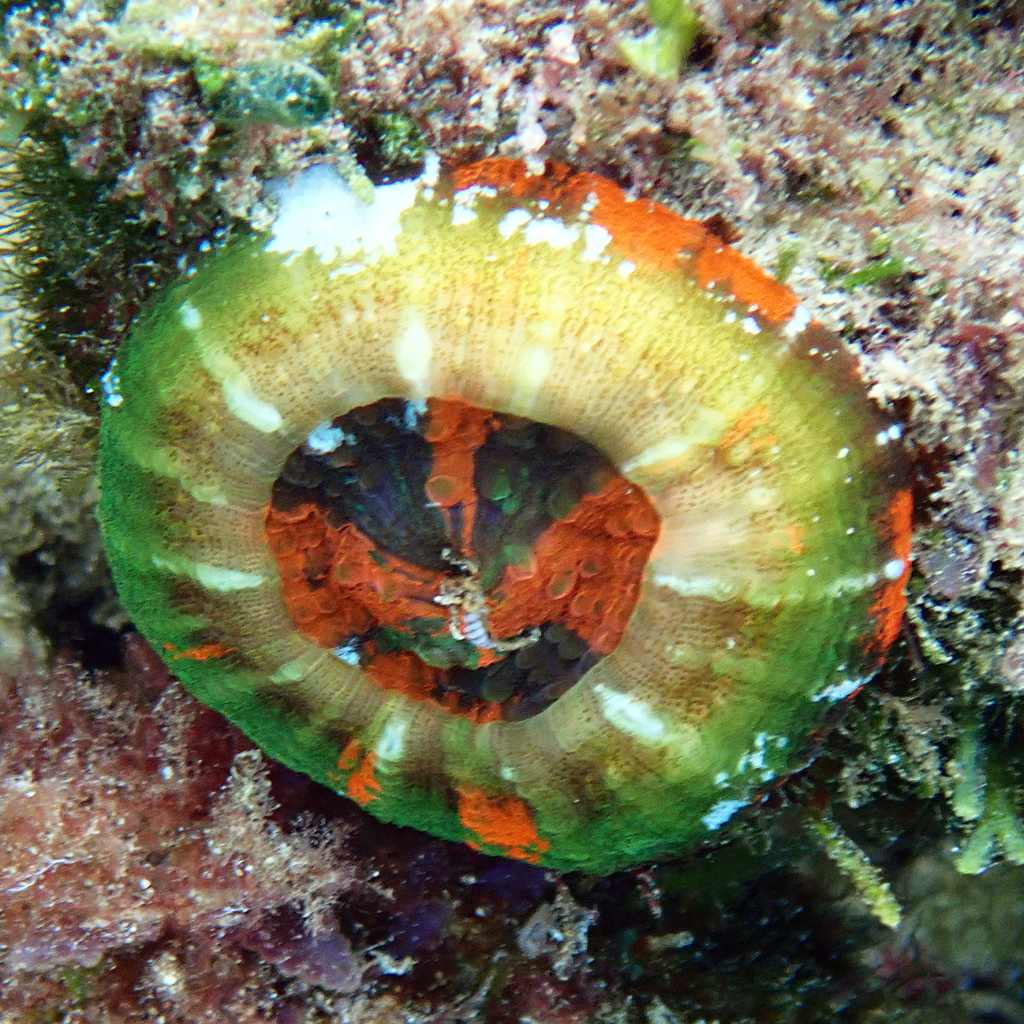
Rainbow Scoly →
A multicolor scoly displaying a broad rainbow spread — yellows, oranges, greens, purples and blues across one disc — among the most prized wild color combinations.
Tip: Centerpiece sandbed placement under moderate, stable light and gentle flow. The coral is hardy, but acclimate it slowly to new lighting since the wide color range can shift with light intensity and spectrum.
 representative
Rainbow Confetti Scoly →
A brilliant orange body sprinkled all over with 'confetti'-like flecks of pastel purple and eye-popping baby blue — a standout single specimen.
Tip: Keep on the sandbed at around 76-78F under moderate light and gentle flow; this is a high-value piece, so prioritize stable parameters over chasing growth. Spot-feed meaty foods.
representativeFrozen Volcano Scoly →
A 'volcano red' body with a glowing fluorescent blue center, the icy-blue mouth contrasting against the hot red disc.
Tip: Sandbed placement under moderate light helps the fluorescent blue center stay bright while protecting the red tissue from bleaching; keep flow low so the polyp inflates over the disc. Feed meaty foods weekly.
representativeBicolor Scoly →
A clean two-tone scoly, typically a single body color with a contrasting rim or center — the entry-level multicolor look before you get into Warpaints and Masters.
Tip: An easy, hardy LPS: low-to-moderate light on the sandbed with gentle flow, and feed small meaty foods a couple times a week to keep the polyp full and colorful.