Sun coral
Tubastraea sp. · also called Sun polyp coral, Tubastraea, Orange sun coral, Cup coral
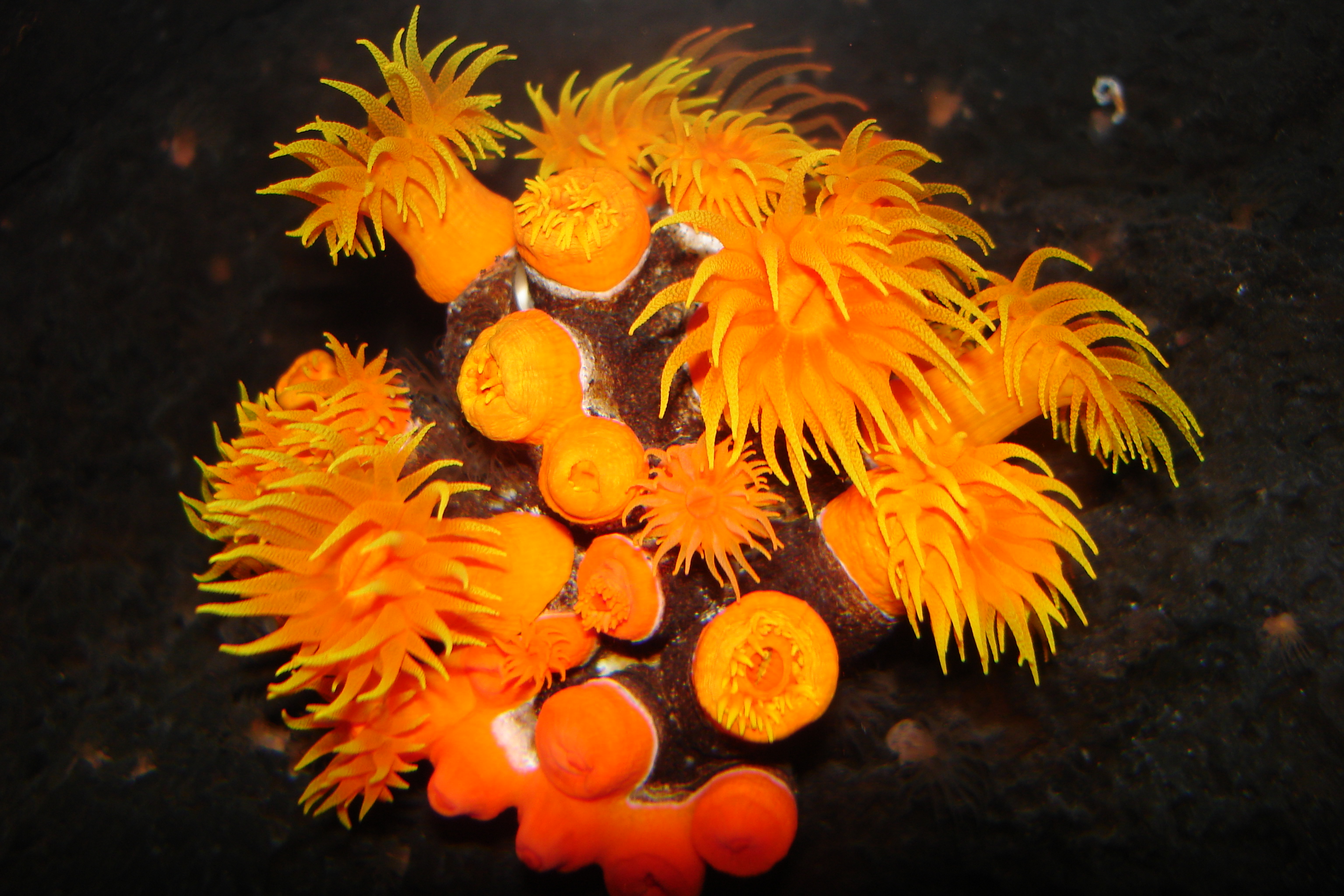
Tubastraea sun corals are non-photosynthetic LPS that lack zooxanthellae, displaying brilliant orange, yellow, or black corallites that bloom into starbursts when fed. Their beauty is matched by demanding husbandry: every polyp must be hand-fed, making them an advanced, high-maintenance coral.
🩺 Need expert help with your sun coral?
Connect with a specialist near you or ask a licensed vet — never substitute online guidance for hands-on care in an emergency.
Quick facts
| Size | Polyps ~0.25-0.75 in (6-20 mm) across when extended; colonies form mounds of dozens to hundreds of corallites several inches wide. |
| Lifespan | 10–50 years |
| Social needs | group |
| Native region | Indo-Pacific native; invasive in the Atlantic, Caribbean, and Gulf of Mexico |
| Origin | Worldwide |
| Climate | 🌴 Tropical |
| Water type | 🌊 Marine |
| Family | Dendrophylliidae |
| Genus | Tubastraea |
Part of the LPS Corals
Large-polyp stony corals (brains, Euphyllia, Goniopora, Scolymia, Lobophyllia, Favites, Acan, Dendro, Octospawn) with fleshy polyps over a calcium-carbonate skeleton. Intermediate-care reef corals that appreciate moderate light/flow and direct feeding.
Habitat & space requirements
From the minimum an animal needs to be kept humanely, up to the ideal setup. Bigger is almost always better — minimums are floors, not targets.
Life & growth stages
How this animal changes through its life — each stage often has its own care, diet and space needs.
Color & pattern variants
Natural variants occur in the wild; selectively bred (man-made) variants were developed in captivity.
representativeOrange sun coral →
The classic sun coral: a dome-shaped (massive) colony of corallites cloaked in bright orange tissue with yellow-to-clear feeder polyps that bloom into a fuzzy starburst at feeding time. The most recognizable and widely sold form of *Tubastraea* (commonly labeled *T. faulkneri* / *T. coccinea*).
Tip: Place in a shaded overhang or cave with moderate flow, out of direct light — it is non-photosynthetic and needs spot-feeding (mysis, reef foods) almost nightly to thrive. Keep it well fed or polyps recede and the colony starves.
 representative
Yellow / Gold sun coral
Yellow-to-gold corallites and polyps (often Tubastraea faulkneri/aurea types), a prized brighter color form.
 representative
Black sun coral →
A dramatic tree-like coral with a near-black, dark-brown or greenish-black branching skeleton and large polyps that often glow fluorescent green when open — the only branching (dendroid) species in *Tubastraea* (*T. micrantha*).
Tip: Mount upright in a shaded cave with moderate-to-strong current; it is the touchiest sun coral, so feed heavily and consistently — survival is poor for under-fed colonies, which makes it the hardest of the group to keep long-term.
 representative
Orange Sun Coral (Tubastraea faulkneri/coccinea) →
The iconic bright-orange sun coral with a deep-orange corallite skeleton and matching tentacles; the most-traded Tubastraea.
Tip: It is azooxanthellate (non-photosynthetic) — you MUST target-feed every polyp meaty food 3-5x/week or it slowly starves; that feeding burden, not light, is why it's an advanced coral.
 representative
Yellow Sun Coral (Tubastraea aurea) →
A sunny yellow form with yellow tissue and tentacles instead of orange; same non-photosynthetic biology as the orange.
Tip: Feed in a low-flow window so polyps stay everted and can grab food; pulse the powerheads off at feeding time, then resume flow once they've eaten.
 representative
Black Sun Coral (Tubastraea micranthus) →
A branching, tree-like sun coral with a dark green-black skeleton and dark polyps that extend feathery green-tinged tentacles, looking dramatically different from the typical encrusting orange forms.
Tip: Mount it where it gets low light and moderate, varied flow, and be especially diligent with frequent target-feeding — branching black suns are notoriously demanding and decline fast if underfed.
 representative
Branching Sun Coral (Tubastraea sp.) →
Orange or yellow forms that grow upward into branching trees rather than flat mats, prized for their sculptural shape.
Tip: Mount upright with space between branches so every polyp gets food and detritus doesn't collect in the crotches; spot-feed the inner polyps that competition usually leaves hungry.
 representative
Neon Green Sun Coral →
An uncommon green-tentacled Tubastraea that fluoresces under blue light; a sought-after color form of the non-photosynthetic sun coral.
Tip: Light only affects how it looks, not how it eats — still feed relentlessly; the green is a bonus, never a substitute for daily target feeding.
representativePink/Rose Sun Coral →
A sun coral offered with pinkish-rose to salmon polyps, a softer pastel alternative to the standard fiery orange. Buyers should be aware that pink coloration in sun corals is sometimes the result of artificial dyeing rather than natural pigment.
Tip: House it in a shaded, low-light spot with moderate flow and feed each polyp meaty foods several times weekly. Be cautious of unusually intense or uniform pink colonies, which may be dyed and tend to fade; consistent feeding is what actually keeps the colony healthy.
representativeYellow Sun Coral →
A yellow-tissue color form of *Tubastraea* with corallites that often project and arrange more loosely than the orange form, giving the colony a brighter, more golden look when expanded. Sold as 'Tube Coral, Yellow' or 'Sun Coral, Yellow.'
Tip: Keep in low light with gentle-to-moderate flow; target-feed each polyp individually with meaty foods several times a week to fuel its polyp budding and hold its color.
representativePink Sun Coral →
An uncommon *Tubastraea* color form with pink-to-salmon tissue, sometimes paired with yellow polyps. Prized as the scarcest of the warm-toned sun coral colors; under some lighting an orange colony can also read pink.
Tip: Shade it under a ledge with moderate flow and feed nightly; like all sun corals it is non-photosynthetic, so consistent feeding — not light — keeps the colony and its color healthy.
representativeAquacultured Orange Sun Coral Colony →
Captive-grown sun coral colonies raised by dedicated feeders; the same orange Tubastraea but adapted to aquarium feeding from the start.
Tip: A great way to buy sun coral because the polyps are already feeding-trained — keep the routine going; a sun coral that stops being fed will recede polyp by polyp.
representativeAustralian Fat Head Dendrophyllia →
A heavy, large-headed sun coral with oversized bright yellow-to-orange polyps and an orange base — frags are sold as single large heads rather than branches. Long traded under the 'Dendrophyllia' name, it was formally described in 2021 as *Tubastraea megacorallita*, placing it within the true sun coral genus.
Tip: Place low in a shaded spot with moderate flow; because the polyps are huge, feed sizeable meaty chunks (silversides, chopped krill, mysis) directly to each head frequently — it is a heavy feeder and is usually shipped live-arrival-only for this reason.