Octospawn
Fimbriaphyllia paradivisa · also called Octobubble, Octospawn Coral, Branching Frogspawn, Euphyllia paradivisa

Photo: iNaturalist (CC0) · CC0
Octospawn is a branching Euphyllia-relative (Fimbriaphyllia paradivisa, the branching frogspawn) named in the trade for its plump, multi-tipped 'octopus-like' tentacles, an intermediate LPS that combines frogspawn-style flowing polyps with a potent sweeper-tentacle sting.
🩺 Need expert help with your octospawn?
Connect with a specialist near you or ask a licensed vet — never substitute online guidance for hands-on care in an emergency.
Quick facts
| Size | Branching colony of large fleshy polyps with multi-tipped tentacles; heads ~5-10 cm expanded, colonies of several to many heads |
| Lifespan | 10–50 years |
| Social needs | solo |
| Native region | Indo-Pacific; Western Pacific reefs through the broader Indo-Pacific |
| Origin | Old World |
| Climate | 🌴 Tropical |
| Water type | 🌊 Marine |
| Family | Euphylliidae |
| Genus | Fimbriaphyllia |
Part of the LPS Corals
Large-polyp stony corals (brains, Euphyllia, Goniopora, Scolymia, Lobophyllia, Favites, Acan, Dendro, Octospawn) with fleshy polyps over a calcium-carbonate skeleton. Intermediate-care reef corals that appreciate moderate light/flow and direct feeding.
Habitat & space requirements
From the minimum an animal needs to be kept humanely, up to the ideal setup. Bigger is almost always better — minimums are floors, not targets.
Life & growth stages
How this animal changes through its life — each stage often has its own care, diet and space needs.
Color & pattern variants
Natural variants occur in the wild; selectively bred (man-made) variants were developed in captivity.
representativeGold/Green Octospawn
Common color forms with gold or green tentacles tipped in contrasting pink, purple, or white; the multi-tipped 'octo' tentacle shape is the defining feature.
 representative
Rainbow Octospawn →
A multicolor octospawn blending green, teal, gold, and pink/orange tones across the same head, often with contrasting tipped tentacles. One of the most sought-after color forms of the species.
Tip: Place low-to-mid in the rockwork under moderate light (PAR ~80-150) with gentle, indirect flow so the fleshy polyps can fully inflate without tearing.
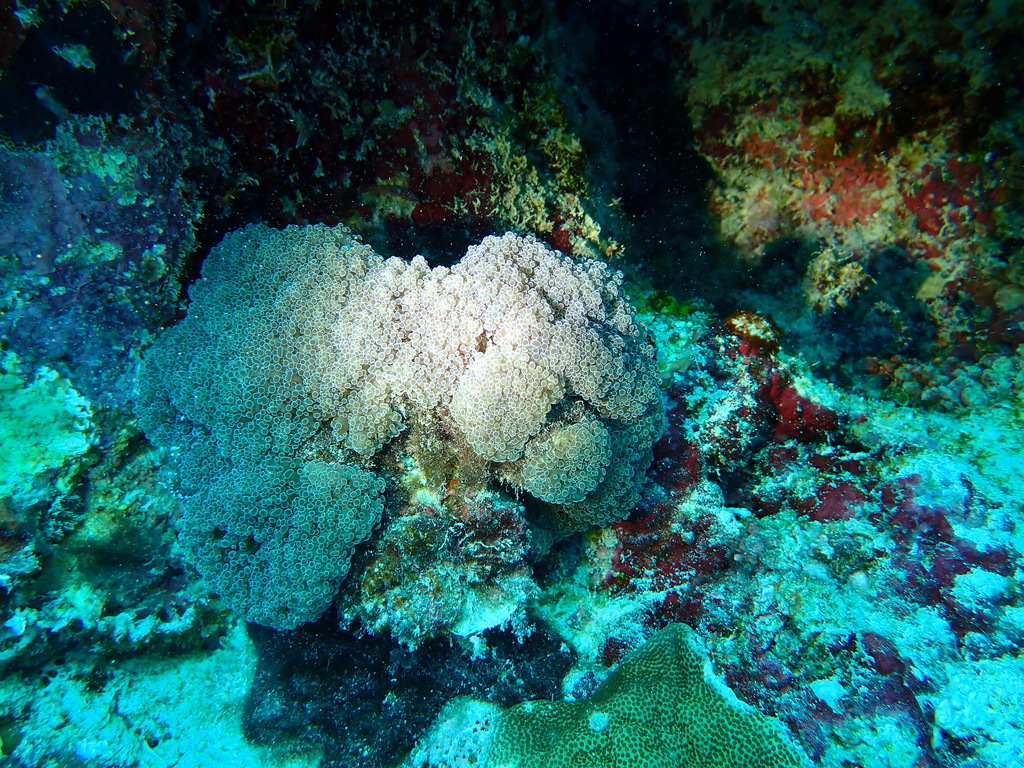 representative
Green Octospawn →
The classic green-bodied octospawn with the signature split, octopus-like fleshy tentacles. The baseline, most widely available color form of the species.
Tip: A forgiving beginner euphyllia: low-to-mid rock placement, moderate light (PAR ~80-150), and gentle indirect flow for full polyp inflation. Avoid direct lateral flow that keeps the heads deflated.
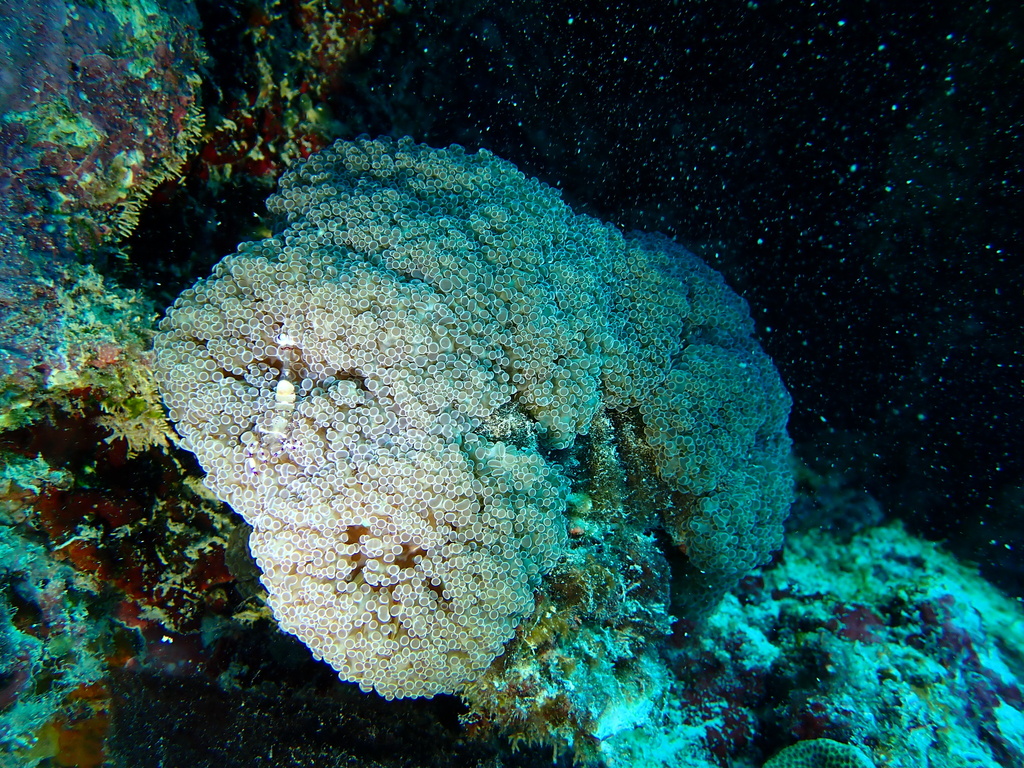 representative
Gold Octospawn →
A solid golden-yellow to honey-toned octospawn, often with a green or contrasting mouth. One of the more prized and less common color forms.
Tip: Give moderate light and gentle flow; the gold pigment holds best under moderate, not blasting, PAR — too much light can wash it pale.
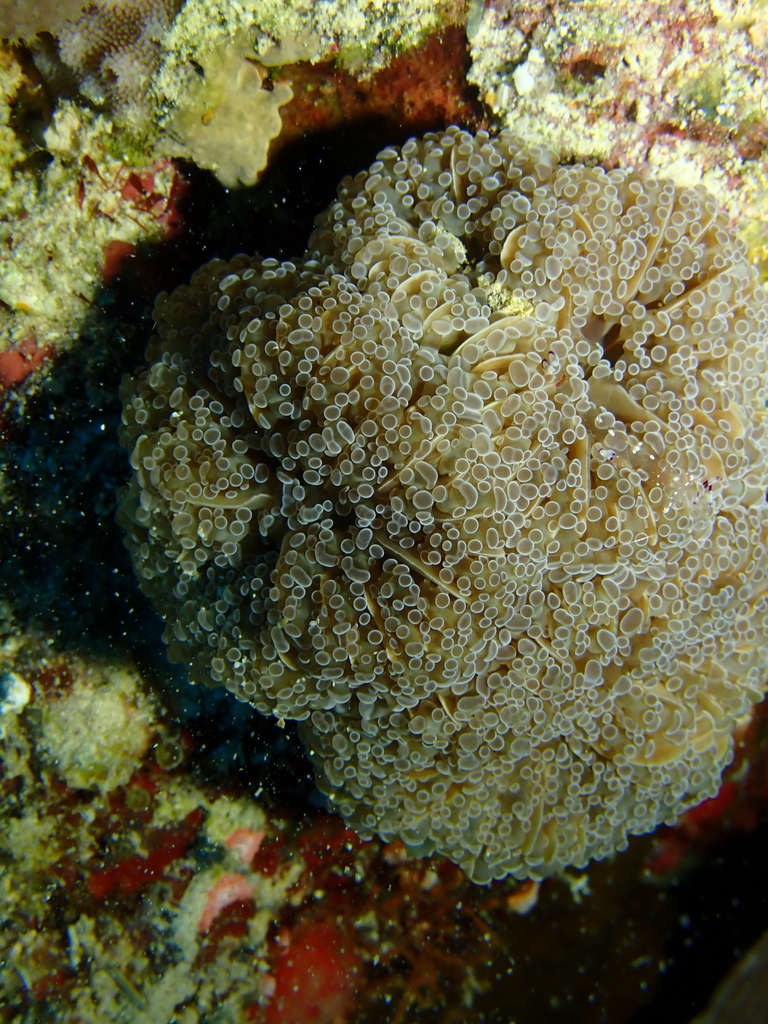 representative
Yellow Octospawn →
A bright yellow-bodied octospawn, lighter and more lemon-toned than the deeper gold form. Often shows green undertones near the base.
Tip: Moderate light (PAR ~80-150) with soft, indirect flow lets the yellow tissue inflate fully; avoid direct high-flow that keeps the polyp deflated.
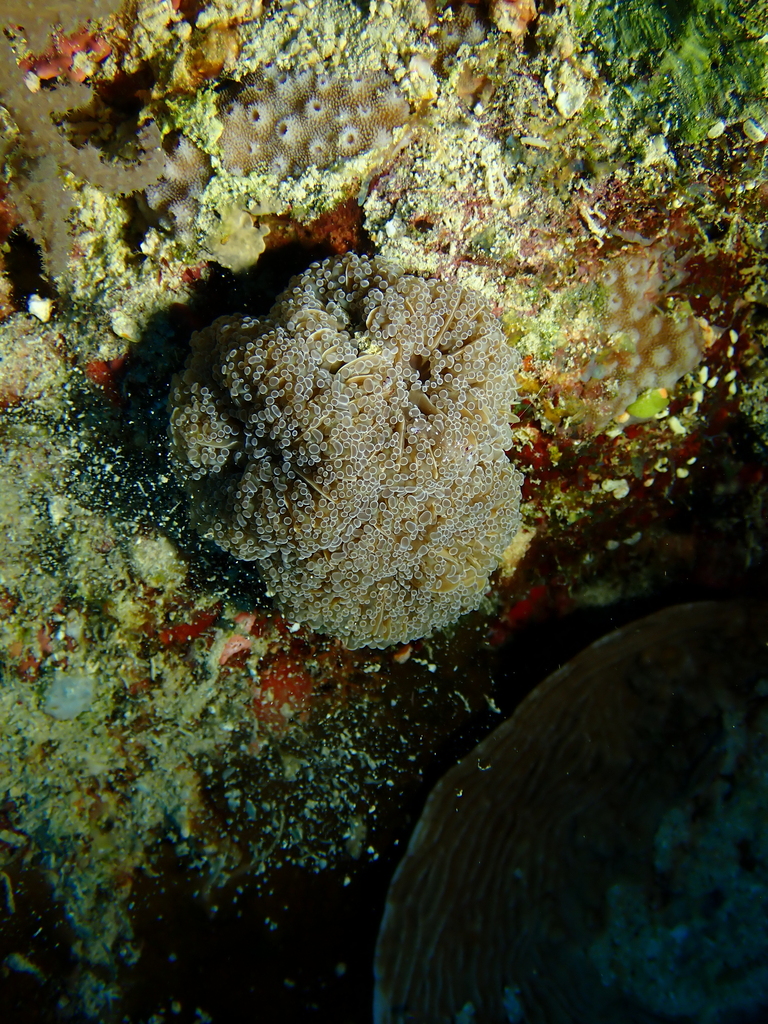 representative
Toxic Green Octospawn →
An intensely neon/electric green octospawn that glows hard under blue (actinic) lighting — the high-saturation 'toxic' grade of the common green form.
Tip: Pops most under blue-heavy reef lighting; place mid-rock with gentle flow so the bright green tentacles stay fully extended.
representativeBlue Octospawn →
A blue-to-teal toned octospawn, an unusual cool-color form versus the typical green and gold pieces. Often shows a blue body with lighter tips.
Tip: Blue tones read best under cooler, blue-spectrum light; keep flow gentle and indirect so the heads inflate evenly.
representativeTeal Octospawn →
A blue-green teal octospawn sitting between the standard green and the rarer blue forms, with a soft cool-toned body.
Tip: Mid-rock placement under moderate light with gentle flow keeps the teal coloration vivid and the polyps fully expanded.
representativePeach Tip Octospawn →
A green-to-cream body octospawn with soft peach/salmon-colored tentacle tips, giving a two-tone tipped look.
Tip: Moderate light and gentle indirect flow keep the delicate peach tips colored up; too much light can wash the pastel tip color out.
representativePink Tip Octospawn →
A green or cream-bodied octospawn with pink-tinted tentacle tips, similar to the peach form but with cooler rosy highlights.
Tip: Keep under moderate blue-leaning light with soft flow to preserve the pink tip pigment and full polyp inflation.
representativeOrange Tip Octospawn →
A green-bodied octospawn capped with warm orange tentacle tips, the warmest-toned member of the 'tip' color family.
Tip: Place mid-rock under moderate light with gentle flow; the orange tips show strongest contrast against a green body under blended white-and-blue lighting.
representativeYellow Tip Octospawn →
A green-to-gold body octospawn finished with bright yellow tentacle tips for a glowing two-tone look.
Tip: Moderate light (PAR ~80-150) with soft indirect flow keeps the yellow tips bright and the polyp fully inflated.
representativeGold Tip Octospawn →
A green-bodied octospawn with rich gold/amber tentacle tips — deeper and warmer than the yellow-tip form.
Tip: Moderate light and gentle flow bring out the gold tips; keep flow indirect so the heavy fleshy heads can inflate fully.
representativeUltra Orange Octospawn →
A heavily orange-to-orange-gold octospawn, often with a contrasting green mouth — a high-grade warm-color form well beyond the usual green.
Tip: Moderate light holds the orange pigment best; place mid-rock with gentle flow and avoid blasting light that can fade the warm tones.
representativeRed Rum Octospawn →
A deep pink-red octospawn with a translucent body and warm red tones — an unusual, distinctly named warm-color form well outside the usual green and gold range.
Tip: Place mid-rock under moderate light with gentle, indirect flow; the warm red/pink pigment holds best under moderate PAR rather than intense light.
Habitat & enclosure
Substrate
Equipment & setup
Diet
Behavior & temperament
Health
Tips, DIY & hacks
Sources
- WoRMS - Fimbriaphyllia paradivisa (Veron, 1990) (database)
- Corals: A Quick Reference Guide (Julian Sprung) (reference)
- Reef2Reef - Euphyllia/Octospawn Care (care guide)