Open brain coral
Trachyphyllia geoffroyi · also called Trach, Folded brain coral, Crater coral, Trachyphyllia, Open brain

Photo: bondolo · CC BY 3.0
A free-living, fleshy LPS prized for its brilliant coloration — reds, greens, oranges, and rainbow swirls — over a folded, brain-like skeleton. It sits on the sand bed and inflates dramatically with water during the day. Striking and rewarding, it is a sand-dwelling solitary coral that needs gentle flow and stable conditions, and benefits greatly from feeding.
🩺 Need expert help with your open brain coral?
Connect with a specialist near you or ask a licensed vet — never substitute online guidance for hands-on care in an emergency.
Quick facts
| Size | Single free-living, butterfly- or hourglass-shaped polyp typically 3-5 in (8-13 cm), inflating with fluid tissue to noticeably larger; remains a solitary head r |
| Lifespan | 5–50 years |
| Social needs | solo |
| Native region | Indo-Pacific |
| Origin | Old World |
| Climate | 🌴 Tropical |
| Water type | 🌊 Marine |
| Family | Merulinidae |
| Genus | Trachyphyllia |
Part of the LPS Corals
Large-polyp stony corals (brains, Euphyllia, Goniopora, Scolymia, Lobophyllia, Favites, Acan, Dendro, Octospawn) with fleshy polyps over a calcium-carbonate skeleton. Intermediate-care reef corals that appreciate moderate light/flow and direct feeding.
Habitat & space requirements
From the minimum an animal needs to be kept humanely, up to the ideal setup. Bigger is almost always better — minimums are floors, not targets.
Life & growth stages
How this animal changes through its life — each stage often has its own care, diet and space needs.
Color & pattern variants
Natural variants occur in the wild; selectively bred (man-made) variants were developed in captivity.
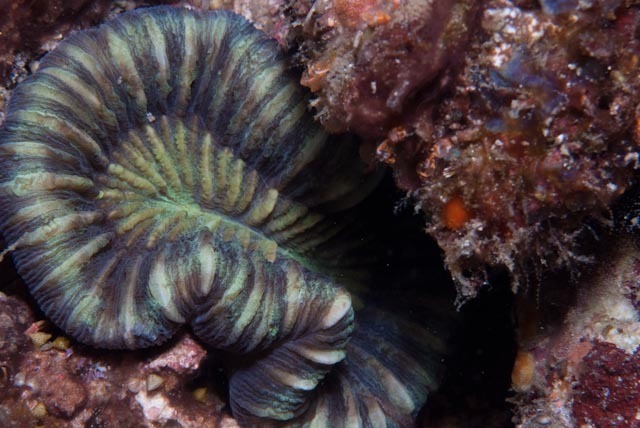 representative
Red / Crimson Trach →
Wild morph with deep red flesh, often with green or contrasting valleys; among the most sought-after color forms.
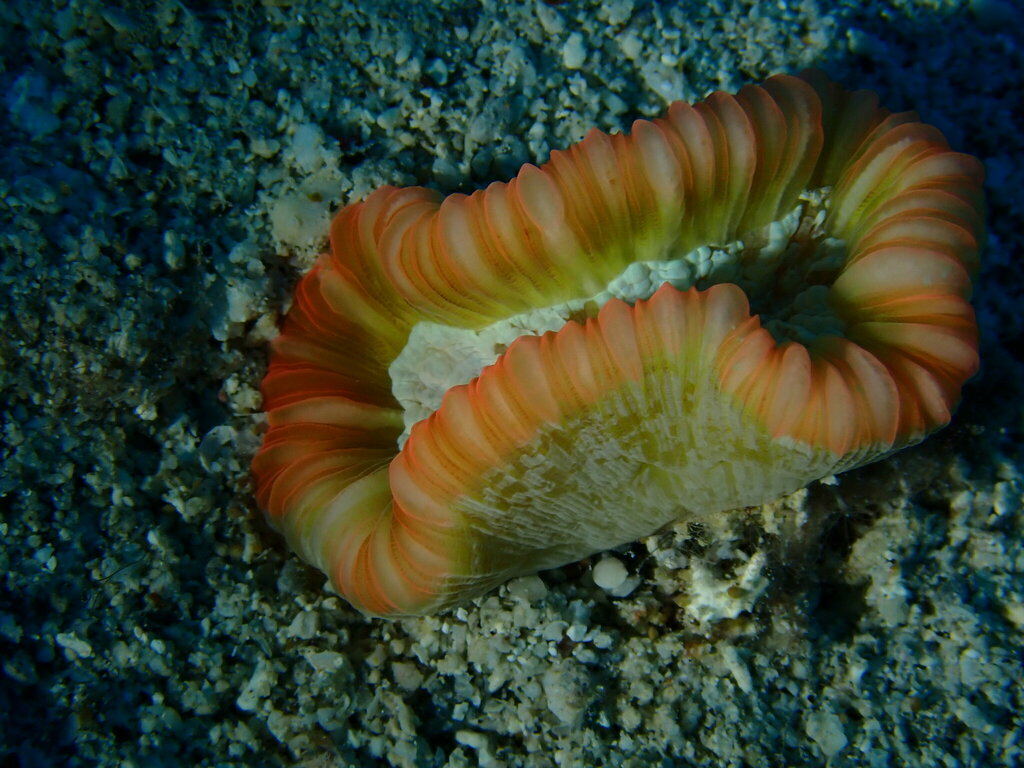 representative
Rainbow Trach →
Multicolor wild specimens swirling red, green, blue, and gold across a single polyp; collected for their extraordinary coloration and priced accordingly.
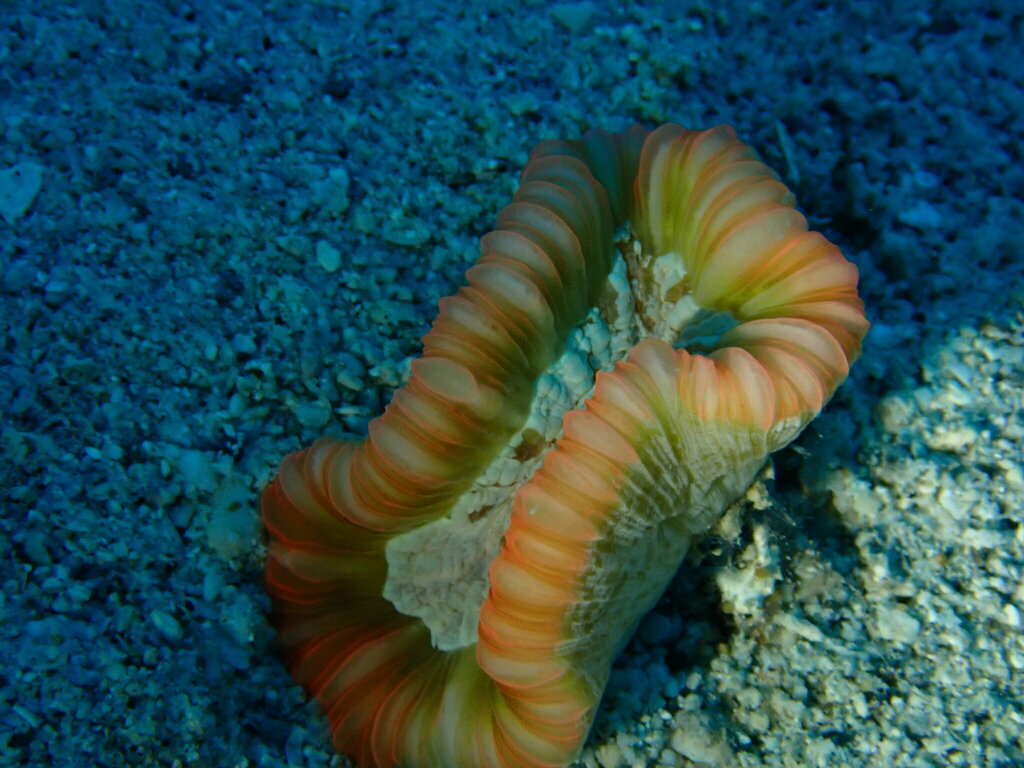 representative
Green / Neon Trach →
Brilliant fluorescent green to teal forms that glow strongly under blue light; a common and striking morph.
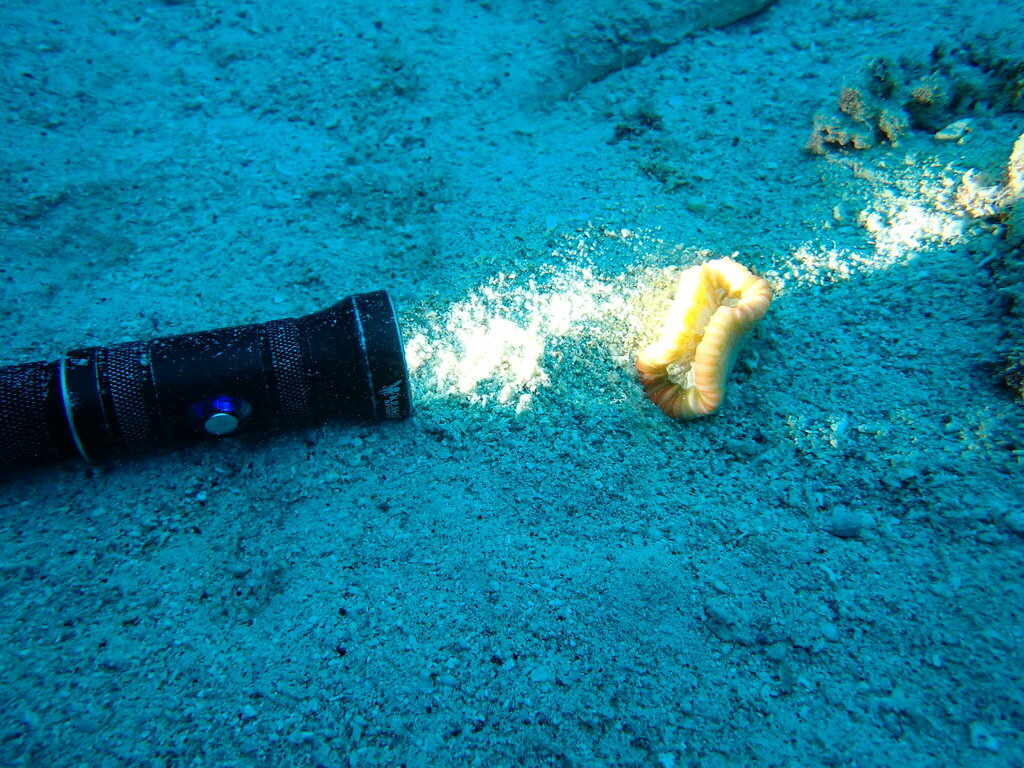 representative
Red Trachyphyllia →
Solid bright-red open brain (*Trachyphyllia geoffroyi*), the classic free-living folded LPS form sold as a centerpiece.
Tip: Place directly on the sand bed under low-to-moderate light and gentle flow; it inflates with water to photosynthesize, so never set it where flow keeps it deflated.
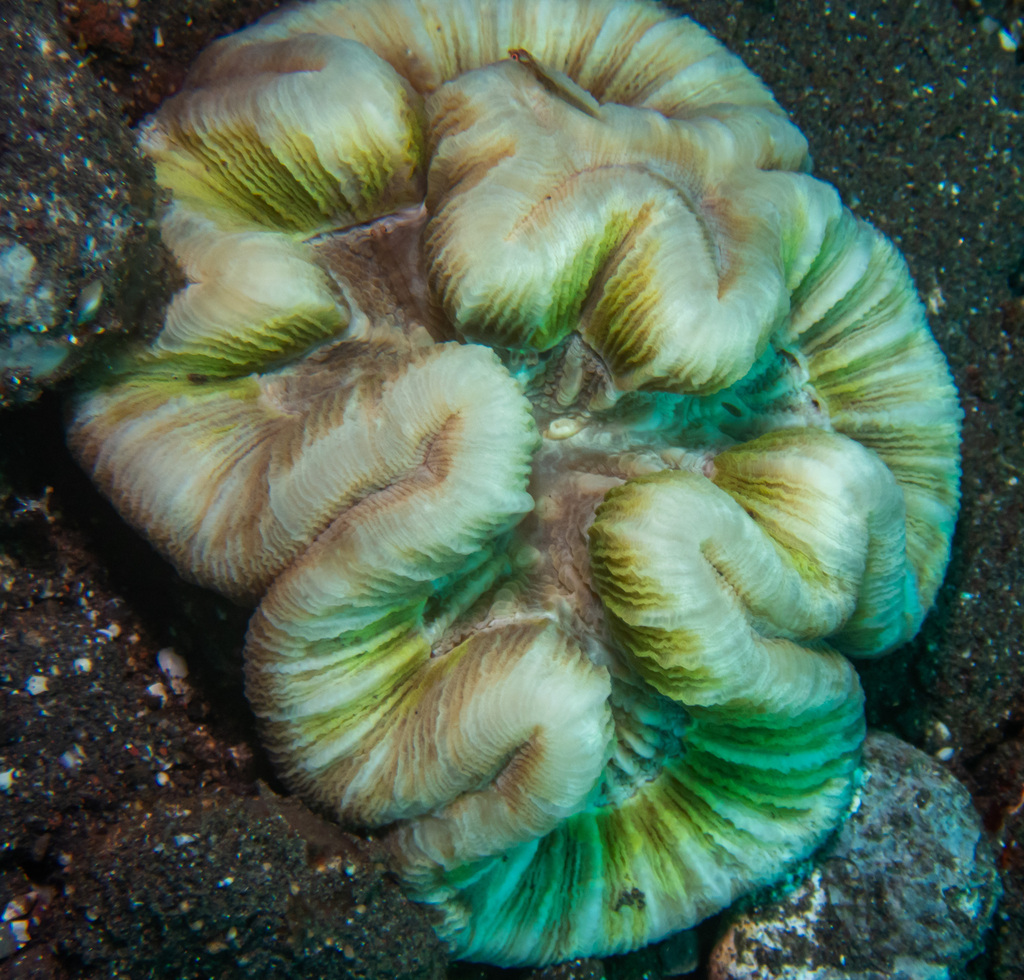 representative
Green Trachyphyllia →
Fluorescent green open brain, the most common color form and very affordable.
Tip: Green is light-hardy but still wants the sand bed — target-feed meaty foods at night when its feeder tentacles emerge to keep it plump and colorful.
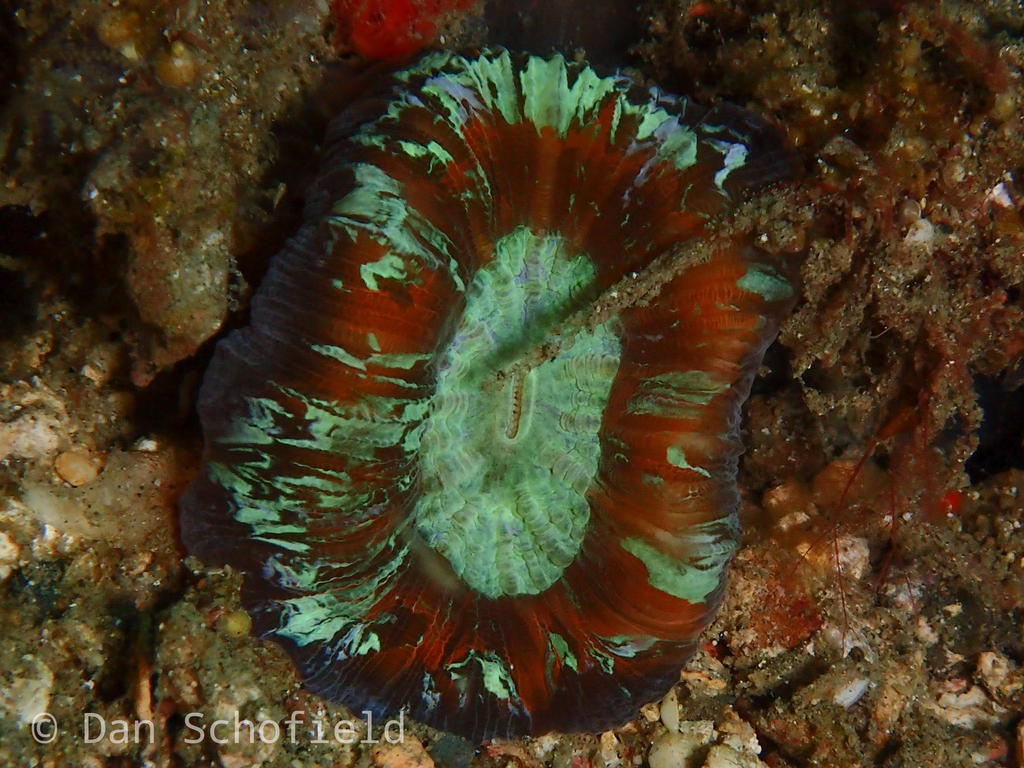 representative
Rainbow Trachyphyllia →
The benchmark wild-collected Trachyphyllia morph: a single fleshy open-brain showing multiple bands of color at once — typically red, orange, green, and lime streaking out from the mouth like a folded ribbon.
Tip: Place on a soft sandbed (not rock) under low-to-moderate light (around 50-100 PAR) with very gentle flow; it inflates a large fleshy tissue mantle that can tear on sharp rock or get sandblasted by strong flow. Target-feed meaty foods at night.
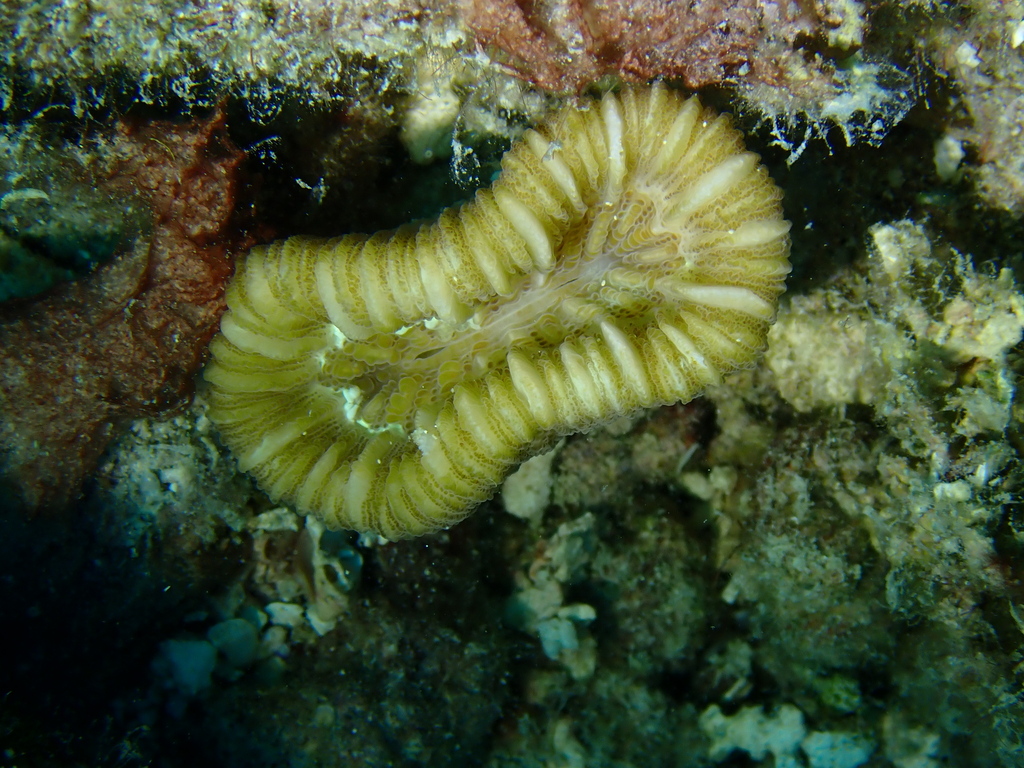 representative
Master / Ultra Trachyphyllia →
Top-grade rainbow specimens with extreme color saturation and contrast, graded and sold as 'Master' or 'Ultra' pieces.
Tip: These are hand-selected wild specimens — quarantine and feed before display, and avoid sharp grit under the tissue, which can cause infections on these soft fleshy LPS.
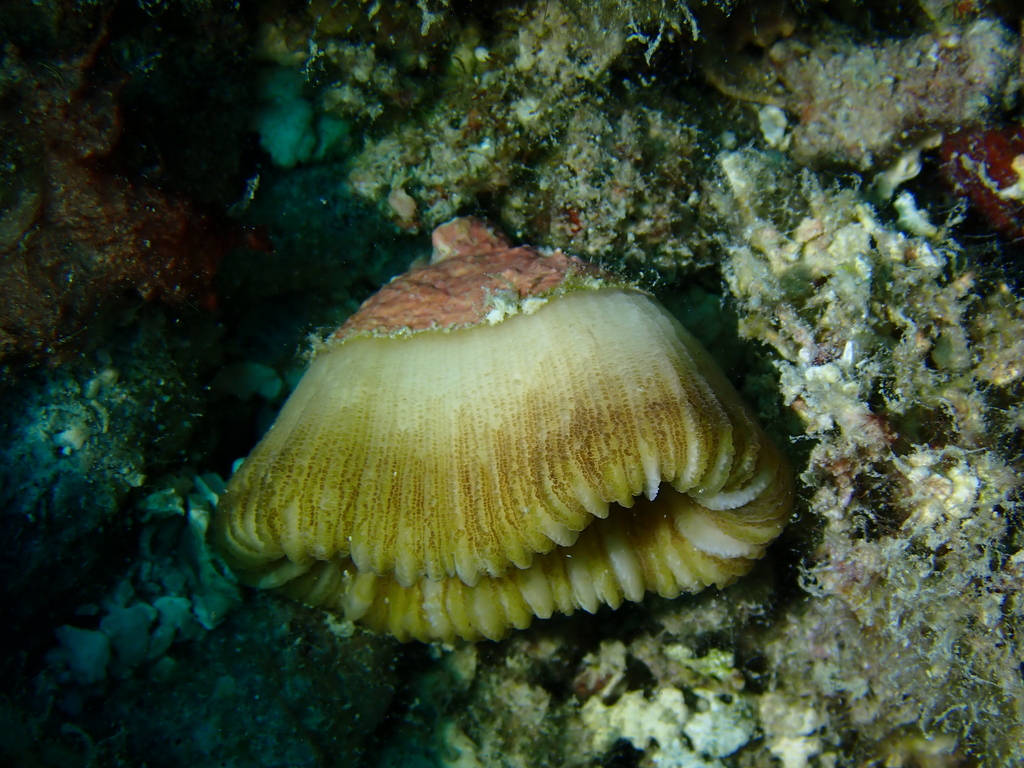 representative
Wellsophyllia / Folded Open Brain →
The heavily folded, meandering form of open brain (historically called *Wellsophyllia*, now lumped into *Trachyphyllia*), with deep convoluted ridges rather than a simple single-mouth dome.
Tip: Soft sandbed, very low flow so detritus doesn't collect in the folds; low-to-moderate light keeps tissue from receding.
 representative
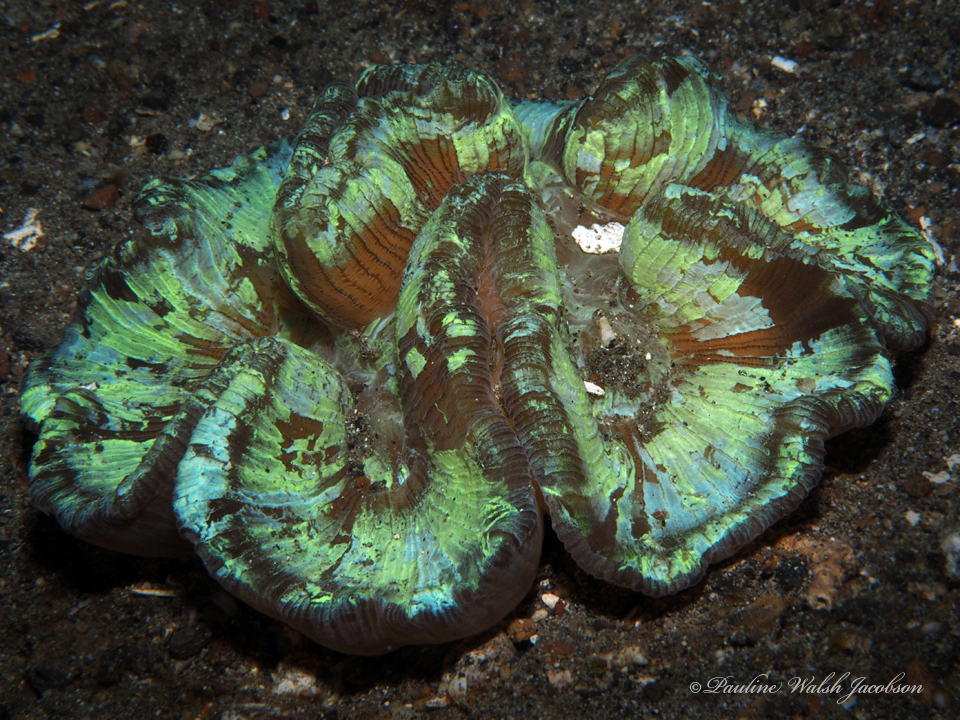
Rainbow Trachyphyllia (Rainbow Open Brain) →
A *Trachyphyllia geoffroyi* displaying several bright colors at once — typically a green or blue base with red, orange and purple banding radiating across the inflated fleshy folds.
Tip: Place on the sandbed in low flow under low-to-moderate light (PAR ~50-100); too much flow tears the tissue and bright light bleaches the colors.
 representative
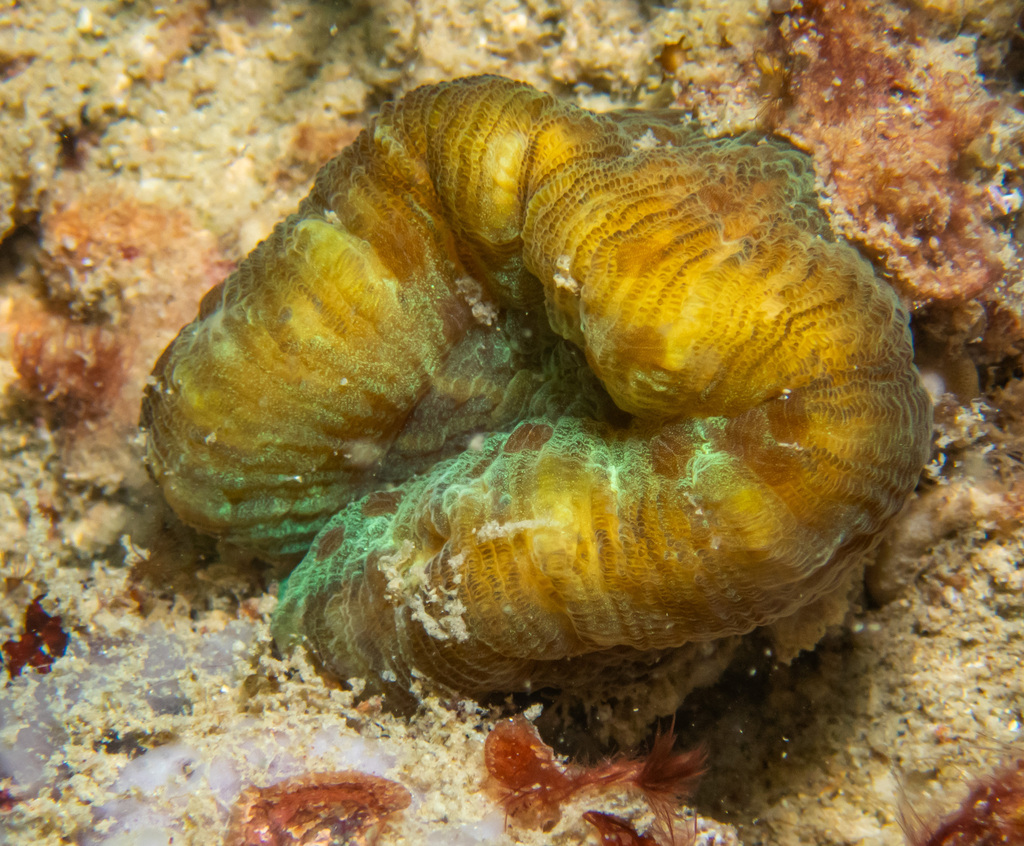
Master Trachyphyllia / Master Brain →
A top-grade 'Master' open brain — an exceptionally vivid, high-contrast multicolor *Trachyphyllia* with saturated reds and greens, the term borrowed from the acan/lord grading culture.
Tip: Sandbed placement, gentle flow, modest light; feed small meaty foods in the evening when feeder tentacles emerge to keep the polyp fat and colorful.
 representative
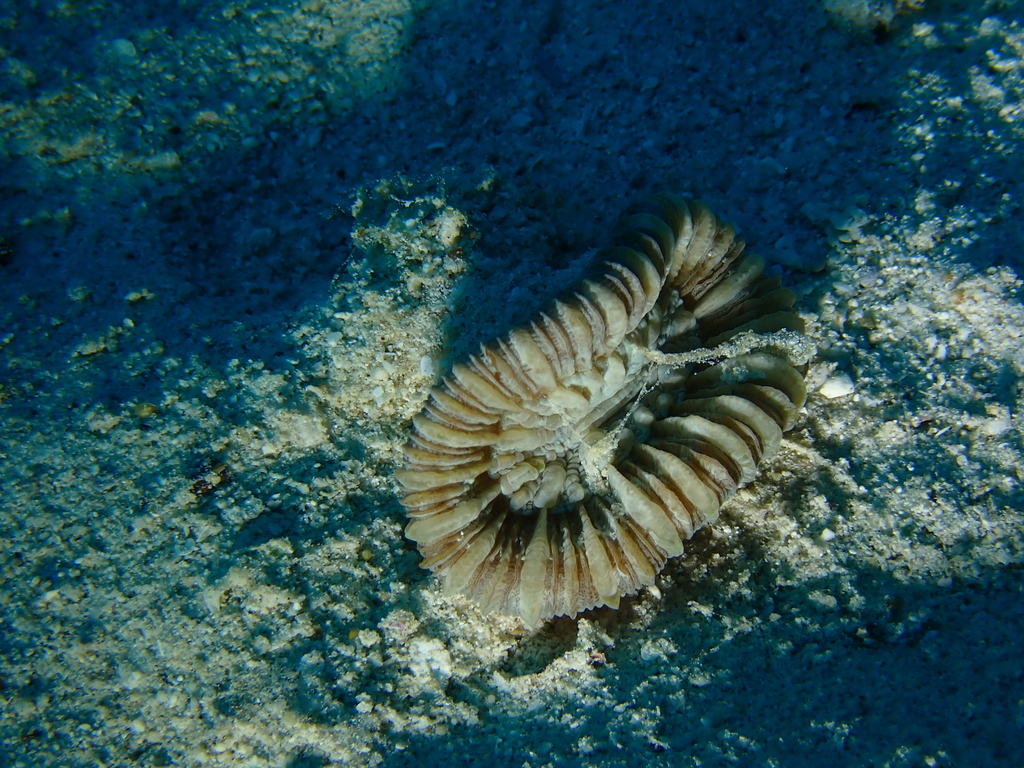
Red/Cherry Open Brain →
A *Trachyphyllia* in a saturated solid red-to-cherry tone, sometimes with a contrasting green or cream mouth, valued for clean uniform red flesh.
Tip: Keep on the sand under low light; reds hold best at lower PAR, and gentle flow prevents the fleshy tissue from being damaged.
 representative
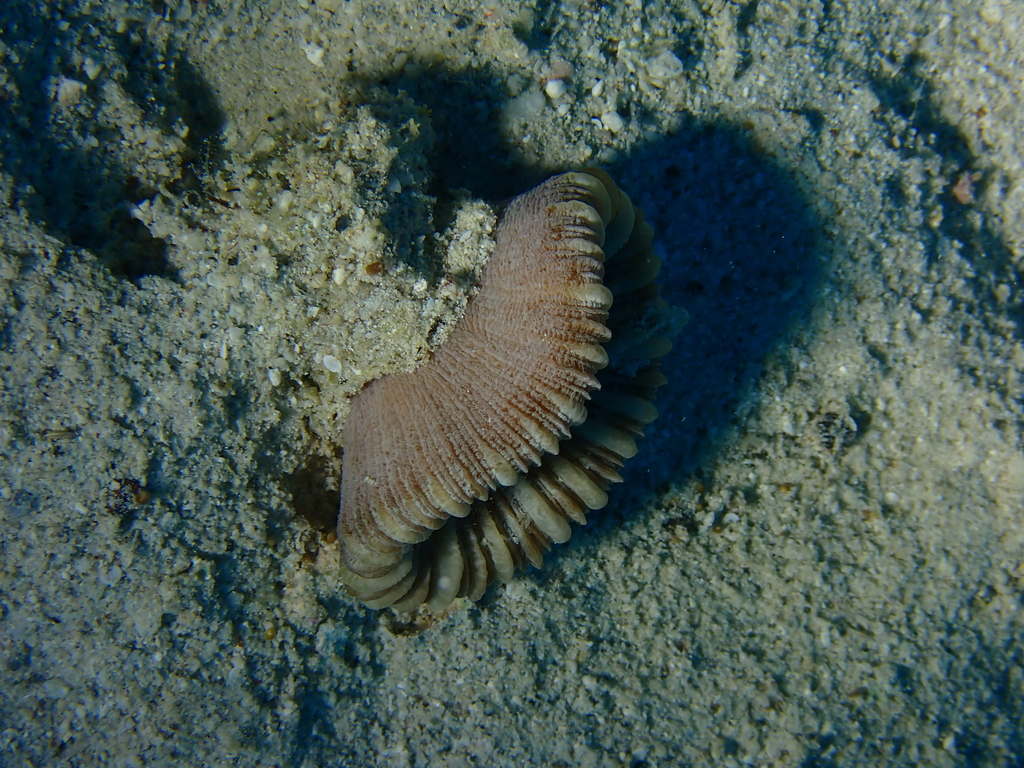
Green/Neon Open Brain →
The classic bright fluorescent-green *Trachyphyllia*, often with a cream or pink mouth, the most widely available colored open brain.
Tip: Sandbed placement in low flow and moderate light; the green fluoresces strongly under actinic-heavy lighting.
 representative
Ultra Rainbow Trachyphyllia →
The top color grade of the rainbow type — a high-contrast colony with a dark purple or maroon base broken up by saturated streaks of pink, blue, neon green, and highlighter yellow. In the trade, "ultra" generally implies four or more distinct colors.
Tip: Sandbed placement under moderate PAR (around 50-100) brings out the contrasting streaks; too much light bleaches the pastel tones, too little mutes them. Keep flow gentle and indirect to protect the inflated mantle.
 representative
Master Grade Rainbow Trachyphyllia →
The collector tier of rainbow open-brain — a showpiece colony loaded with five or more distinct colors and dramatic streaking, the kind of piece used as a tank centerpiece.
Tip: Give it open sandbed real estate so the fully inflated mantle can expand; keep flow indirect and feed small meaty foods at night to maintain the heavy tissue and color. Moderate, blue-leaning light preserves contrast.
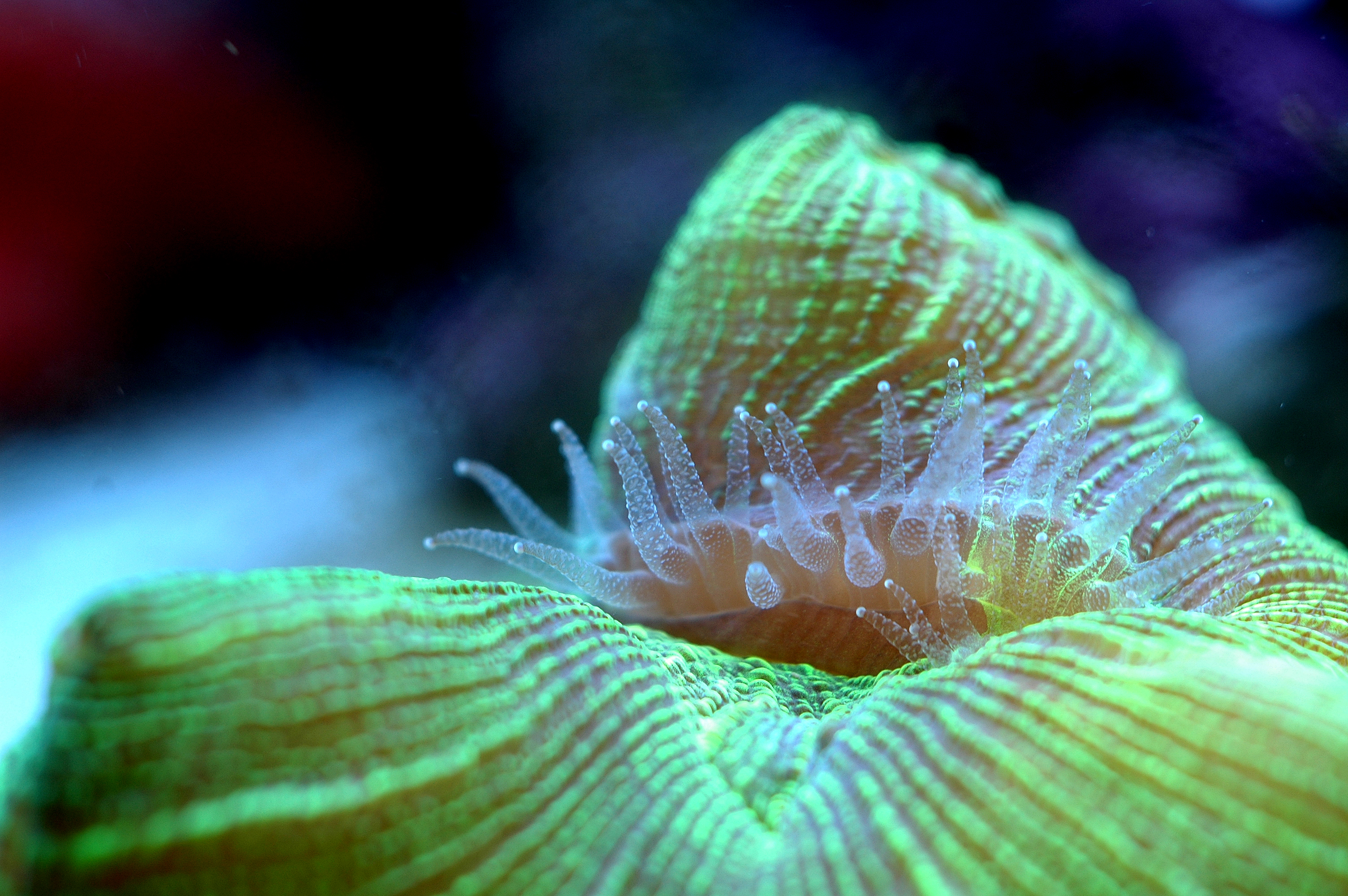 representative
Lime Rainbow Trachyphyllia →
A rainbow Trachy where electric lime-green dominates the base, with red, orange, or pink rings around the mouth for contrast.
Tip: The lime pigment pops hardest under cooler/bluer light on the sandbed; keep flow gentle so the bright body tissue stays fully expanded. Spot-feed occasionally at night.
 representative
Fruit Bomb Trachyphyllia →
A World Wide Corals signature open-brain packed with candy-bright fruit colors — reds, oranges, pinks, and greens crammed together so it reads like a bowl of fruit.
Tip: Sandbed only, gentle flow, moderate blue-heavy light (around 50-100 PAR); target-feed occasionally at night to keep the dense pigment fed.
 representative
Heavenly Rainbow Trachyphyllia →
A World Wide Corals named multicolor open-brain with a soft pastel rainbow spread — blended greens, pinks, and oranges across a fully inflated mantle.
Tip: Keep on the sandbed under modest light; pastel Trachys lose their soft tones if pushed under high PAR, so err toward lower light and gentle flow.
 representative
Old Glory Trachyphyllia →
A World Wide Corals named open-brain with a bold red-and-cool-tone palette across the folds, the name nodding to a red-white-and-blue-leaning look.
Tip: Sandbed placement with low flow; rotate the piece occasionally so all sides of the mantle get even light and the colors develop uniformly. Feed meaty foods at night.
representativeCherry Lime Explosion Trachyphyllia →
A World Wide Corals named piece contrasting cherry-red rings against an exploding lime-green body — a classic high-contrast red-on-green open-brain.
Tip: Cooler/bluer light deepens the red-green contrast; keep it on sand with gentle, indirect flow to protect the swollen tissue.
 representative
Burning Rainbow Trachy Brain →
A fiery rainbow open-brain dominated by burning reds and oranges with green and yellow accents and a flaming pink/red rim, named for its hot color spread.
Tip: Give it open sand and gentle flow; the warm reds hold best under moderate light (around 50-100 PAR) rather than extreme high-PAR placement.
 representative
Neon Green Trachyphyllia →
The classic monochrome morph — a glowing neon/fluorescent green striped open-brain, often with subtle purple or red undertones in the grooves.
Tip: The most forgiving Trachy color; place on sand under low-to-moderate light and gentle flow. A great beginner LPS that still fluoresces hard under blue light.
representativeUltra Red / Red & Green Trachyphyllia →
A red-dominant open-brain, ranging from solid deep red to the classic two-tone red body with neon green grooves running through the folds.
Tip: Reds intensify under bluer spectrum and lower light; keep on the sandbed with soft flow to keep the heavy red tissue fully inflated. Spot-feed meaty foods occasionally.